Achieving rotary kiln process stability for efficient clinker production
Stable rotary kiln process is essential for maintaining consistent clinker quality and ensuring efficient cement production. It relies on precise control of combustion, gas composition and thermal conditions across the kiln system, particularly in the burning zone, where the process is most sensitive to disturbances. Steady kiln operation depends on continuous monitoring of critical process variables such as O₂, CO, temperature and draft. Robust gas analysis at the kiln inlet provides the data needed to support accurate kiln control, detect early disturbances and maintain optimal operating conditions, even with increasing alternative fuel use.
The following sections show how measurement solutions help optimize rotary kiln operation and enhance process control under harsh kiln conditions.
Explore improvement potential in rotary kiln operation
See how targeted measurement improves combustion performance, controls volatile cycles and stabilizes kiln inlet conditions across the rotary kiln process.
Improve process stability with reliable fuel control
Increasing use of alternative fuels introduces variability in calorific value, moisture and ash composition, making combustion control more demanding. Continuous gas analysis at the kiln inlet enables operators to adjust firing conditions, prevent process disturbances and maintain predictable kiln behavior.
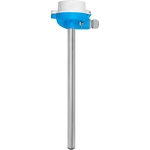
Enhance burner control to maintain uniform heat profiles: Accurate temperature measurement using iTHERM TM151 and robust thermowell solution such as iTHERM TAF16 with abrasive-resistant sheath material support reliable monitoring and help stabilize combustion behavior in the burning zone
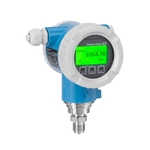
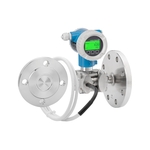
Stabilize pressure conditions to improve kiln control: Pressure monitoring with Cerabar PMP71B and differential pressure measurement using Deltabar PMD78B provides critical insight into draft and gas flow behavior, enabling consistent kiln control
Enable continuous gas analysis to detect combustion deviations early: Process gas analysis systems MCS300P HW combined with kiln inlet sampling solutions SCPS deliver continuous measurement of O₂, CO, SO₂ and HCl and other combustion indicators
Improve energy efficiency and reduce emissions variability:MEAC300 delivers clear evaluation of emissions data, helping operators reduce fuel consumption, improve combustion performance and maintain compliant cement manufacturing conditions
Maintain stable combustion and prevent process fluctuations: Control your burner performance when using alternative fuels with Promass I 300
Insights
Control volatile cycles and prevent process disturbances
Volatile cycles can disrupt rotary kiln process stability and affect clinker quality in cement production. Recirculation of sulfur, chlorine and alkalis creates unstable gas chemistry, leading to build-up, coating formation and increased variability in the burning zone. Continuous monitoring of key process indicators enables early detection of these effects and supports reliable kiln control.
Monitor volatile cycle build-up before it impacts kiln operation: Continuous gas analysis with MCS300P HW provides accurate measurement of SO₂, HCl and related components, providing early visibility into sulfur and chlorine cycles
Stabilize gas chemistry to prevent cyclone blockage and coating formation: Gas extraction using SCPS with real-time analysis allows to control volatile recirculation. Temperature measurement with iTHERM TM152 ensures consistent reaction conditions
Identify disturbances affecting the burning zone and clinker quality early: Combined with pressure monitoring using Cerabar PMP71B, operators gain insight into airflow imbalances and process instability
Detect process disturbances to improve kiln control: Condition Monitoring solution enables cloud-based remote monitoring of vital device parameters. Connected analyzers feed data to monitoring apps, enabling early trend detection and condition-based maintenance to reduce costs and downtime
Stabilize kiln inlet gas composition for precise rotary kiln control
Gas composition at the kiln inlet plays a key role in rotary kiln performance and clinker quality in cement production. Combustion behavior, volatile cycles and process disturbances converge at this critical point. Continuous monitoring at the kiln inlet enables early detection of process changes.
Optimize monitoring of O₂ and CO to improve combustion behavior: Gas analysis using MCS300P HW combined with high-temperature sampling solutions SCPS delivers reliable measurement of oxygen and carbon monoxide
Maintain temperature conditions at the kiln inlet to regulate the burning zone: Temperature measurement with iTHERM TAF16 offers insight into thermal conditions, helping regulate heat transfer and maintain consistent clinker quality
Balance draft and gas flow to improve kiln performance: Pressure monitoring with Cerabar PMP71B and differential pressure measurement with Deltabar PMD78B gives visibility into gas flow and draft conditions
Discover how Ciments Calcia is transforming its French sites with low‑carbon innovation, next‑gen clinker production, and high‑performance gas analysis systems delivered with speed and reliability.
Optimize your preheater stage with advanced measurement solutions that enhance process control and reduce energy consumption.
/
FAQ
Frequently asked questions on stable rotary kiln operation
The following questions address key measurement challenges in rotary kiln operation and show how continuous monitoring supports kiln control, clinker quality and environmental performance in cement production.
Clinker production: Driving energy efficiency & emission reduction
Explore how stable clinker production improves energy efficiency, reduces emissions and supports compliance with evolving environmental requirements.
Improve rotary kiln stability through precise combustion control
Understand how process drivers, disturbances and measurement challenges influence rotary kiln stability, combustion control and clinker production performance.
We value your privacy
We use cookies to enhance your browsing experience, collect statistics to optimize site functionality, and deliver tailored advertisements or content.
By selecting "Accept all", you consent to our use of cookies.
For further details please review our cookie policy .